
Remote work isn’t a trend anymore. It’s a lifestyle. And in 2026, more countries than ever are rolling out digital nomad visas designed for remote workers, freelancers, and online entrepreneurs who want to earn from anywhere and live in inspiring places.
If you’ve ever dreamed of answering emails from a beach café, working from a mountain town, or swapping your office view for something wildly more exciting, this guide is for you.

Here are some of the best digital nomad visas in 2026 that offer relatively simple applications, reasonable income requirements, and affordable cost of living.
 Portugal

Portugal continues to be one of the most popular choices for remote workers.
Why people love it:
- Reasonable income requirements
- Access to the Schengen Zone
- Strong expat communities
- Beautiful coastal cities and charming historic towns
- Lisbon and Porto are vibrant hubs, while smaller cities like Braga offer a lower cost of living with incredible quality of life.
Visa Snapshot
- Visa Type: Digital Nomad / D8 Visa
- Income Requirement: Around €3,000+ per month
- Length of Stay: 1 year, renewable
- Bonus: Access to Schengen travel
 Mexico
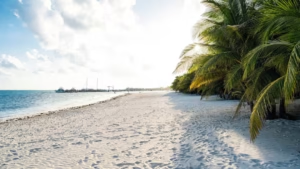
Mexico remains a favourite for North Americans looking for flexibility and affordability.
Highlights:
- Temporary resident visa options for remote workers
- Lower cost of living compared to Canada and the U.S.
- Established nomad communities in places like Playa del Carmen and Mexico City
- Bonus: You can live comfortably while still being in a similar time zone for work.
Visa Snapshot
- Visa Type: Temporary Resident Visa
- Income Requirement: Approx. $2,500–$3,500 USD/month (varies by consulate)
- Length of Stay: Up to 4 years
- Processing: Apply through a Mexican consulate before arrival
“The world is a book, and those who do not travel read only one page.” – Saint Augustin
 Spain
Spain

Spain’s digital nomad visa continues gaining traction in 2026.
What makes it attractive:
- Moderate income thresholds
- Access to Europe Incredible lifestyle balance
- World-class food and culture
- Barcelona and Valencia are especially popular among remote professionals
Visa Snapshot
- Visa Type: Digital Nomad Visa
- Income Requirement: Around €2,000+ per month
- Length of Stay: 1 year initially, renewable
- Notable Perk: Potential tax incentives for new residents
 Costa Rica

If your dream is jungle-meets-Wi-Fi, Costa Rica is still a strong contender.
Why consider it:
- Dedicated digital nomad program
- Tax incentives for foreign income
- Stunning nature and eco-lifestyle
- It’s ideal for those who want adventure outside work hours
Visa Snapshot
- Visa Type: Digital Nomad Visa
- Income Requirement: Approx. $3,000 USD/month
- Length of Stay: 1 year, renewable
- Perk: Foreign income not taxed locally
 Estonia

One of the first countries to launch a digital nomad visa, Estonia remains a tech-forward option.
Perks:
- Streamlined digital systems
- Clear income requirements
- Strong infrastructure for remote workers
- Best suited for those who prefer organized systems and a quieter lifestyle
Visa Snapshot
- Visa Type: Digital Nomad Visa
- Income Requirement: Around €3,500+ per month
- Length of Stay: Up to 1 year
- Ideal For: Tech-forward remote professionals
What to Consider Before Applying
Not all digital nomad visas are created equal.
Before choosing a country, look at:
- Minimum income requirements
- Length of stay allowed
- Tax implications
- Healthcare access
- Cost of living
- Time zone compatibility
And remember: some visas allow you to bring family members, while others do not.
Is the Digital Nomad Life Right for You?

Living abroad while working remotely can be incredible, but it also requires planning.
If you’re exploring long-term stays abroad, make sure you have:
- Reliable travel insurance
- A clear understanding of visa conditions
- Flexible flight options
- A realistic monthly budget
- The freedom is real. So is the responsibility.
If you’re starting to explore remote living options, Totally Travel can help with flights, stays, insurance, and experiences once you arrive.
Because working from anywhere should still feel supported, not stressful.
Application Processes and Documentation Simplified
Applying for digital nomad visas can seem tough. But knowing what documents you need can make it easier. Countries are making their application processes smoother for remote workers.
First, you need to know what most countries ask for. You’ll need a valid passport, proof of income, and health insurance that covers you abroad.
Essential Documentation Checklist
Before you apply, make sure you have these documents:
- A valid passport with at least six months’ validity
- Proof of remote income (bank statements, employment contracts)
- Health insurance that covers you internationally
- Completed application form, usually available online
- Recent passport-sized photographs

Health Insurance Options and Requirements
Health insurance is key for digital nomad visas. Most digital nomad visas require proof of valid travel medical insurance for the duration of your stay. Even where it isn’t mandatory, comprehensive coverage is strongly recommended for remote workers living abroad.
Most countries want insurance that covers:
- Medical expenses up to a certain amount (varies by country)
- Emergency medical evacuations
- Repatriation of remains
Canadian residents can find travel insurance options here.
Travelers from outside Canada can view international coverage options here.
Proving Remote Income: Strategies and Tips
Showing you have remote income is vital.
Here are some tips:
- Bank statements showing regular income
- Employment contracts or freelance agreements
- Tax returns or invoices that demonstrate your income level
It’s smart to have a letter from your employer or a detailed income breakdown. This should show you have a steady income that meets the country’s standards. By preparing your documents well and knowing what’s needed, you can make the application process easier for your digital nomad visa.
Monthly Living Expenses in Top Destinations
Mexico remains one of the more budget-friendly options, with many digital nomads spending roughly $1,200–$2,000 USD per month depending on lifestyle and city.
Spain varies widely by region, while Costa Rica tends to land higher, often starting around $2,000–$3,000 USD monthly.
Estonia typically sits mid-range for Europe, with average monthly living expenses between $2,000–$3,000 USD.
The Actual costs will depend heavily on housing choices, travel habits, and personal lifestyle preferences.

Internet Quality & Cost Considerations
Reliable internet is non-negotiable for digital nomads. Estonia and Spain offer strong infrastructure and fast, reliable connections, especially in major cities. Portugal also ranks well for internet quality, particularly in Lisbon and Porto. Mexico’s larger hubs like Mexico City and Playa del Carmen provide solid Wi-Fi options, though smaller towns can vary. Costa Rica has good connectivity in popular expat areas, but rural or beach regions may require more research before committing long-term.
Before choosing a destination, check:
- Average internet speeds
- Coworking availability
- Backup
- Wi-Fi options
- Mobile data plans
Your income depends on your connection.
Transportation & Accommodation Costs
Transportation and housing can shape your entire monthly budget. Portugal and Spain have excellent public transportation systems, especially in urban areas, which can significantly reduce car expenses. Estonia is compact and walkable in Tallinn, making it easy to get around. Mexico varies by city — some areas rely more on rideshares or taxis. Costa Rica often requires more planning if you live outside city centers, and many nomads rent vehicles for flexibility.
Accommodation options range from:
- Short-term Airbnb stays
- Monthly furnished rentals
- Co-living spaces
- Traditional apartments
Your housing choice will likely be your biggest monthly expense.

Practical Considerations for Digital Nomads
If you’re traveling from the United States or Canada, there are additional things to consider.
🇨🇦 Canadian Citizens
Canada does not automatically tax citizens living abroad the same way the US does, but residency status matters. If you become a non-resident for tax purposes, your tax obligations may change. Always confirm your status before relocating for an extended period.
🇺🇸 US Citizens
The United States taxes its citizens on worldwide income, even if you live abroad.
You may qualify for:
- The Foreign Earned Income Exclusion (FEIE)
- Foreign tax credits
It’s wise to speak with a cross-border tax professional before relocating long term.
Healthcare & Insurance
Most digital nomad visas require proof of health insurance. Portugal, Spain, Estonia, and Costa Rica all require coverage for visa approval. Mexico may require insurance depending on your visa type and residency length.
Important – Standard travel insurance may not cover:
- Long-term stays
- Adventure activities
- Remote work equipment
- Certain medical evacuations
Before relocating, make sure your coverage matches your lifestyle and visa duration.
Banking & Financial Logistics
Managing money across borders requires planning.
Digital nomads often use:
- Multi-currency bank accounts Low-fee international debit cards
- Online banking platforms
- International-friendly credit cards
Portugal, Spain, and Estonia have straightforward banking systems for residents.
Mexico and Costa Rica may require additional documentation to open local accounts.
Plan ahead for:
- International transfer fees
- ATM withdrawal limits
- Currency exchange rates
Conclusion
Choosing Your Ideal Digital Nomad Destination in 2026 Portugal, Mexico, Spain, Costa Rica, and Estonia each offer something slightly different.
Portugal and Spain provide European lifestyle with solid infrastructure.
Mexico offers affordability and proximity for North Americans.
Costa Rica delivers nature and balance.
Estonia attracts tech-forward remote professionals who prefer structure and efficiency.
- The right choice depends on:
- Your income level
- Your time zone needs
- Tax considerations
- Lifestyle priorities
- Long-term goals
Digital nomad visas in 2026 are more accessible than ever — but choosing wisely makes all the difference.
FAQ
Q – What is a digital nomad visa?
A – A digital nomad visa allows remote workers to legally live in a foreign country while earning income from outside that country.
Q – Which of these countries are easiest for US or Canadian citizens?
A – Mexico and Portugal are often considered among the more straightforward options. Spain and Costa Rica have clear requirements but slightly more documentation. Estonia has a structured but transparent process.
Q – Do US citizens still pay taxes abroad?
A – Yes. The US taxes worldwide income, though exclusions and credits may apply.
Q – Do Canadians pay tax while living abroad?
A – It depends on residency status. Canadians who establish non-residency may have different obligations.
Q – Do I need health insurance?
A – Yes. All of these countries require proof of insurance for digital nomad visas.
Q – Can I bring my family?
A – Portugal, Spain, and Costa Rica generally allow dependents. Requirements vary by country.
Q – How much income do I need?
A – Income thresholds vary but typically range between $1,500–$3,500 USD per month depending on the country.